
MySpeekie® is the world's first AAC to solve the challenge of English's opaque orthography using a phonetic keyboard. Show the Code™
MySpeekie: the world's first one-screen AAC, helping children communicate freely, whether or not they use spoken words.



%20(1).jpg)
MySpeekie® is Powered by Ortho-GraphiX®
MySpeekie® One-Screen AAC
The World's first Phonetic Keyboard for Kids: Type the Phonemies, See the Words, Hear them Voiced
Show the Code™ Word Mapping
Thought to Voice Technology that ALSO Supports
Guided Self-Teaching of Reading and Spelling!


Emma Hartnell-Baker developed Thought-to-Voice Technology with Innovate UK funding. MySpeekie® is the world's first one-screen AAC, designed for children who are non-speaking, use few words, or whose speech is difficult for others to understand. It requires no speech, reading or spelling to use, while supporting children to communicate, learn to read and learn to spell.
Although the technology is also used to support bidirectional word mapping and help children learn to read and spell, this MySpeekie.com site has a different purpose.
It is am information site for parents, teachers and therapists supporting children who are non-speaking, struggle with clear articulation, or are learning how to pronounce English words.
You'll find video clips, practical guidance and ready-mapped words to download and use immediately with children.
MySpeekie® is the first one-screen AAC where a user types the speech sounds in words using the phonetic keyboard, with Phonemies as phonetic symbols for kids, and the technology generates the correctly spelled word or sentence, voiced aloud, no reading or spelling required. This Thought-to-Voice tech was developed with Innovate UK funding.
No other AAC does this. AAC developers have said publicly: English spelling isn't phonetic, so a simple sound-to-letter swap fails on common words. The Code Mapping algorithm has solved that problem, so that every word is mapped to show where its graphemes actually sit, together with their sound values, aligning with phonics instruction. It can also be adapted to each child's own accent.
As the former owner-manager of two Outstanding-rated nurseries, a former Ofsted Inspector, and having spent a decade training teachers in Australia, this is built on direct classroom and regulatory experience, not theory alone.
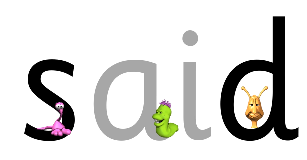
Children tap Phonemies® (Phonetic Symbols for Kids) to turn thoughts into communication. While learning how to segment their speech sounds, which are then typed, the tech produces Mapped Words® showing which letters are graphemes, while Phonemies® make phonemes visible, bridging each child's speech, print and meaning.
This sits within the wider Word Mapping Mastery® System, guiding children towards confident bidirectional word mapping and self-teaching. Through ShowTheCode.com, parents, practitioners and teachers learn what children, particularly neurodivergent learners, need to move towards orthographic mapping.
Training Hut
ShowTheCode.com
Use the Show the Code technology to see instantly which letters form graphemes and the sound value of each, in every word of English.


"What shall we say today?"
Thought to Voice with Fliss and the Phonemies
Think of the first word.
Type the Speech Sounds in that word, even if you can't produce them.
Show Word
Voice!
Also Create Sentences! This is Speech Sound Mapping


Are Phonemies® picture-embedded mnemonics? No. They are Phonetic Symbols for Kids.
We are often asked whether Phonemies® are like the picture-embedded mnemonics used in phonics programmes such as Letterland, where a character such as Clever Cat is permanently embedded into the letter <c>. No.
We do not use or recommend picture-embedded mnemonics for teaching phonics. The only place we recommend them is for letter formation, as seen in our use of the RWI letter formation cards on the SpeechSoundPics.com site. In that context, the character provides a memorable phrase linked to the letter's formation, for example, "round the curly caterpillar", helping children remember the correct starting and finishing points. However, if the same character is permanently associated with the grapheme for phonics, children must then dissociate it when they encounter words such as cent, where <c> represents a different speech sound.
If embedded characters are used, they should represent phonemes, not graphemes. We are the first to do this with a complete set of speech sound characters, merging phonetic symbols with bidirectional word mapping for both reading (phonics) and spelling.
Phonemies® make children's phonemic awareness visible without using letters. Because each Speech Sound Monster® represents a phoneme, children simply select the sounds they hear in a word, in the order they hear them. This allows educators to see exactly which phonemes a child has identified, omitted, added or confused, even if the child is non-speaking or has unclear speech.
This principle underpins Dys-Code® screening. Carried out from the age of three, before children begin learning phonics, Dys-Code® uses no letters or graphemes. It therefore assesses phonemic awareness rather than letter knowledge, helping to identify the estimated one in five children at risk of later literacy difficulties while there is still time to provide early support.
Phonemies® (Speech Sound Monsters®) represent English speech sounds, not letters or graphemes. They are linked to graphemes only when they appear in a word and the speech sound represented by that grapheme is known.
The same Speech Sound Monster® appears on the <e> in end, the <a> in any, and the <o> in women because, in those words, the different graphemes represent the same speech sound. Likewise, the same Speech Sound Monster® appears on the <s> in sip and the <c> in cent. The Speech Sound Monsters® remain the same while the graphemes change.
If children pronounce those words differently because of their accent, the Speech Sound Monsters® are simply changed to represent the speech sounds they actually use. The spelling stays the same, while the Speech Sound Monsters® reflect the child's pronunciation.
As far as we can determine from extensive searches, including patent searches, analyses of every DfE-validated phonics programme and many others used around the world, together with a review of publicly available AAC devices, this appears to be a world first.

The Speech Sound Monsters® also make phonics easier to understand, and that's what draws so many educators to our Show the Code training!
MyWordz® is the underlying technology platform that connects speech, print and meaning through bidirectional word mapping.
MySpeekie® is the world's first one-screen AAC.
Children don't need to be able to read or spell to start Speech Sound Mapping. They communicate by clicking the speech sounds using the Phonemies® screen. The written word or sentence can be viewed by the child or the person they are communicating with, and they can choose to click Voice to hear it spoken aloud.
MySpeekie® enables children to think of a word or sentence, generate it using Phonemies®, and connect speech, print and meaning at the same time.
The word mapping technology also enables adults to create and print mapped word cards that can be used as prompts when a child does not yet know which Phonemies® to select, or when they know the speech sounds but need support generating the word independently.
Adults can learn how to use MySpeekie®, create mapped word cards, and understand how to Show the Code with Speech Sound Pics® and Phonemies® at ShowTheCode.com.